
Once described as treeless land
Tree Removal in Elmhurst, IL
Most big trees in Elmhurst were planted by someone. Here is how we handle the ones at the end of the road.
- On-site quotes at no charge in Naperville and nearby towns
- Written, line-by-line pricing up front
- Agreed cleanup, no surprises after the job
A Canopy Built by Hand
Tree Removal in Elmhurst involves trees with a history. In 1842 the land that became Elmhurst was described as treeless. The community was first called Cottage Hill when its post office opened in 1845, was renamed Elmhurst in 1869 and incorporated as a village in 1882. Most of the large shade trees on its older streets were planted by residents, builders or the city over the following 150 years. Many of those trees are now very large, and some are near the end of their lives.
Owners who stay
Elmhurst homeowners tend to stay put. Census QuickFacts shows a 79.9% owner-occupied rate, 91.8% of residents in the same house as a year earlier and a median home value of $545,400. About 19% of residents are 65 or older. Many of the trees we are asked about have been in the family for decades, and the owner has watched them slowly change.
Salt Creek and flooding
Elmhurst's topography has led to flooding after heavy rains, and the city has worked on major flood-control projects. A 150-foot-deep former limestone quarry west of downtown covers about 59 acres and can hold up to 8,300 acre-feet of stormwater diverted through a tunnel from Salt Creek. Trees in low areas and near the creek spend time in saturated soil, which weakens their roots. Those are the trees most likely to tip in strong wind after a long rain.
Signs it may be time
- A large dead section or a dead top
- Fungus or soft wood at the base
- A crack at a main fork that seems to be getting longer
- New lean, lifting soil or exposed roots after a storm
- Dead ash still standing
- Roots that keep invading sewer lines or lifting walks
Older homes and teardowns
Elmhurst has notable architecture, including homes by Frank Lloyd Wright, Mies van der Rohe and Walter Burley Griffin, along with many early 20th-century houses. Like other inner suburbs, it has also seen older homes replaced by new construction. Trees near rebuild sites often lose roots to excavation and driveways. Decline may show up two or three years later, starting at the top of the tree. If a tree beside a new house is thinning, have it looked at.
How we work on close lots
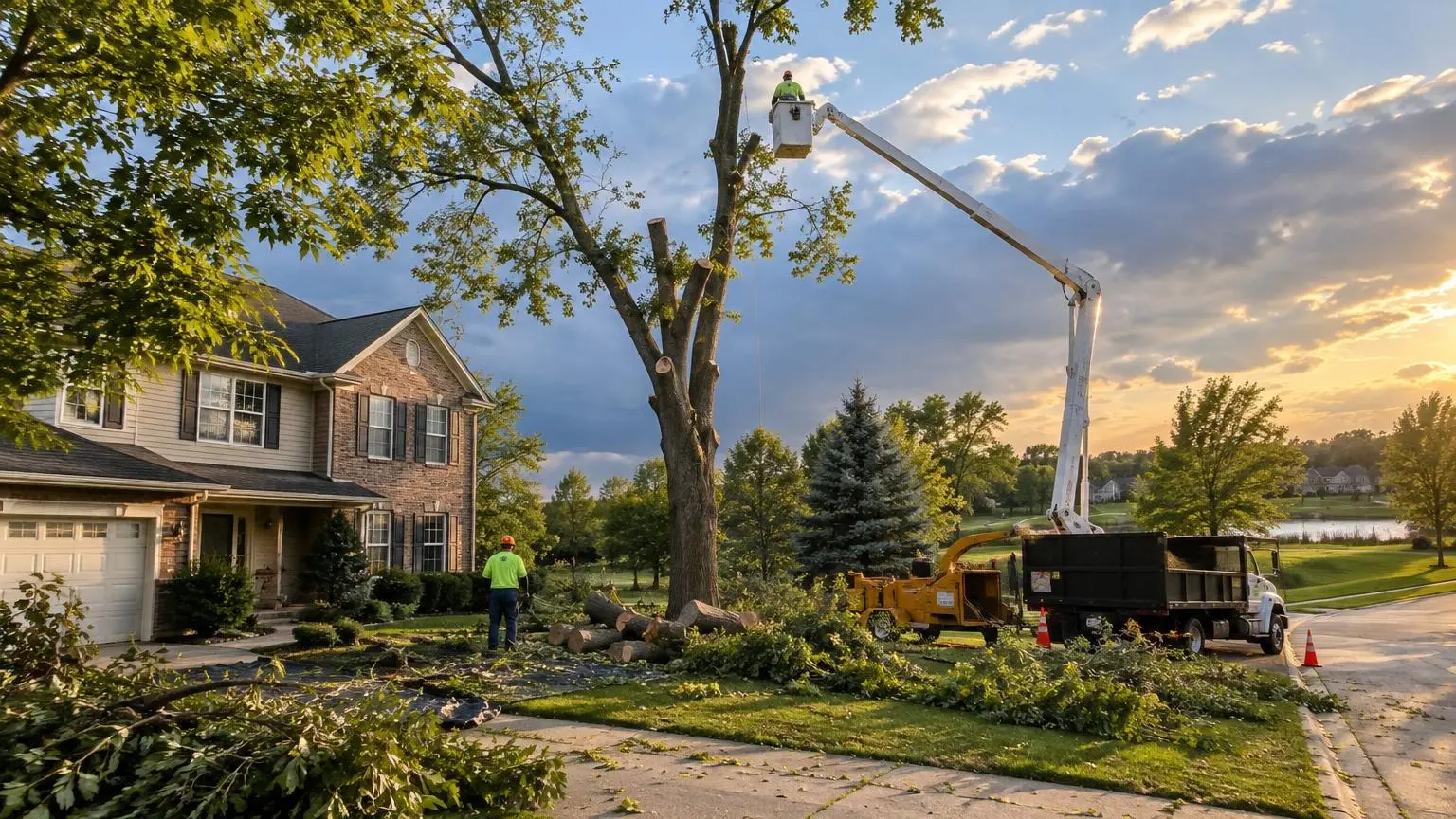
Elmhurst lots are often narrow, with garages on alleys and wires running through the trees. Removals here are usually done piece by piece: limbs are cut and lowered on ropes, the trunk comes down in sections and wood is carried to the street or alley. A crane may be used when a tree leans over a house and cannot be climbed safely. We explain the method in the written estimate.
Parkway trees
Trees in the parkway between the sidewalk and street are often city trees. Check with the city before having one removed. We work on private property only.
Stumps and replanting
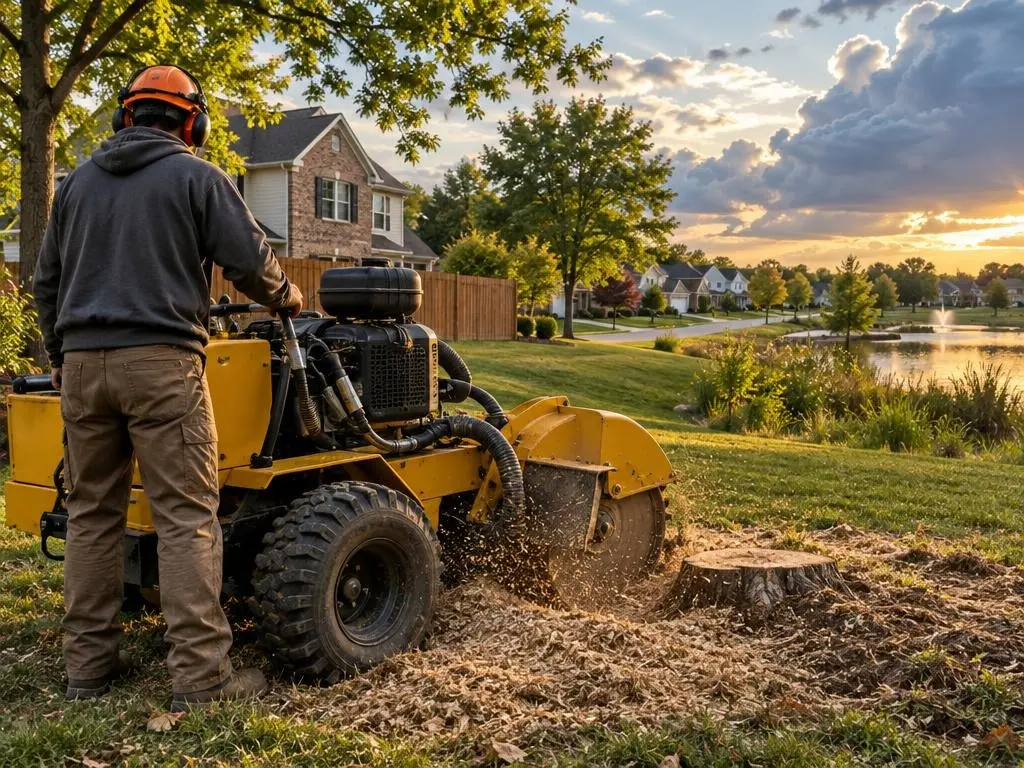
We grind stumps below grade. If you plan to replant, grindings can be removed and replaced with soil, and a spot a few feet from the old stump is usually best.
Asking the right first question
Before talking about removal, it helps to know what the tree is and what is really wrong with it. Some declining trees respond well to pruning, mulching and watering. Others are past saving. We give you a straight answer, and if the tree can stay, we will tell you that too.
Contact
Call (630) 864-5605 or use the form. A written estimate follows the visit. Get a free estimate
Elmhurst Facts
- From treeless land. Land in the Elmhurst area was described as treeless in 1842; the community was called Cottage Hill in 1845, renamed Elmhurst in 1869 and incorporated as a village on June 5, 1882.
- Quarry flood storage. A 150-foot-deep, roughly 59-acre limestone quarry west of downtown can hold up to 8,300 acre-feet of floodwater diverted through a tunnel from Salt Creek.
- Parkway tree count. Elmhurst counted about 22,000 parkway trees in its 2009 inventory and 20,652 in 2021, after the city cancelled its 2021 planting program to save money during the pandemic.
Elmhurst Questions
My yard floods near Salt Creek. Are my trees at risk?
Trees in saturated soil can lose root strength and are more likely to tip in wind. If a tree near the creek has started to lean or the soil is lifting, have it looked at.
Can you remove a tree from an alley-access lot?
Yes. We often stage from the alley, lower pieces with rigging and carry wood out. We keep the alley clear for neighbors as much as possible.
My new home's old tree is thinning. Is it construction damage?
It may be. Root loss from excavation often shows up years later. We can look and tell you whether to monitor it or plan removal.
Free Estimates in Elmhurst, IL
Written estimates for Elmhurst homes, old and new.
Tree Removal Near Elmhurst
- Tree Removal in Naperville, IL
- Tree Removal in Aurora, IL
- Tree Removal in Wheaton, IL
- Tree Removal in Lisle, IL
- Tree Removal in Downers Grove, IL
- Tree Removal in Warrenville, IL
- Tree Removal in Winfield, IL
- Tree Removal in Glen Ellyn, IL
- Tree Removal in Woodridge, IL
- Tree Removal in Westmont, IL
- Tree Removal in Oswego, IL
- Tree Removal in Montgomery, IL
- Tree Removal in North Aurora, IL
- Tree Removal in Batavia, IL
- Tree Removal in Geneva, IL
- Tree Removal in St. Charles, IL
- Tree Removal in West Chicago, IL
- Tree Removal in Darien, IL
- Tree Removal in Burr Ridge, IL
- Tree Removal in Hinsdale, IL
- Tree Removal in Oak Brook, IL
- Tree Removal in Clarendon Hills, IL
- Tree Removal in Lombard, IL
- Tree Removal in Carol Stream, IL
- Tree Removal in Yorkville, IL
- Tree Removal in Sugar Grove, IL
- Tree Removal in Willowbrook, IL