
Twenty square miles along the Fox
Tree Removal in Yorkville, IL
Room to work on bigger lots, and the wind exposure that comes with open country.
- On-site quotes at no charge in Naperville and nearby towns
- Written, line-by-line pricing up front
- Agreed cleanup, no surprises after the job
Where the Suburbs Meet the Fields
Tree Removal in Yorkville covers a lot of ground. The city spans about 20 square miles but had only about 1,077 people per square mile at the 2020 census, far less dense than the DuPage suburbs to the northeast. Yorkville was settled in 1833 when Earl Adams built a cabin on Courthouse Hill, incorporated in 1836, and has been the Kendall County seat since 1859. Its population grew from 6,189 in 2000 to 21,533 in 2020, and Census estimates put it near 26,700 by 2025. That mix of an old river town, rapid new growth and open farmland shapes the tree work here.
Open ground, more wind
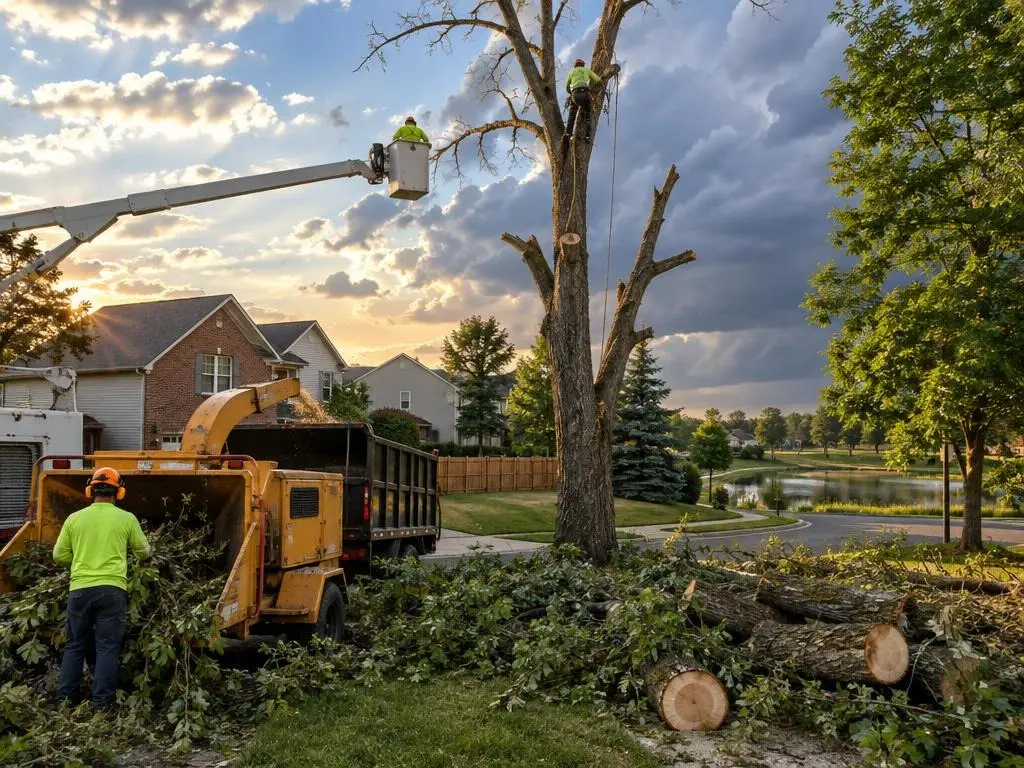
Yorkville sits where subdivisions border working farmland. Trees on the edges of open fields take the full force of storm winds, and spring and summer here can bring severe thunderstorms and tornadoes. After a big storm, we see broken tops, split trunks and trees that have been pushed over at the roots. Windbreak rows of spruce and pine along field edges are especially prone to wind damage once they reach maturity.
Newer subdivisions
Most of Yorkville's housing has gone up since 2000. Census QuickFacts shows a 79.8% owner-occupied rate, a median home value of $335,300 and 26.8% of residents under 18. Trees planted with those subdivisions are now 15 to 25 years old. Common problems include:
- Fast-growing trees with weak forks splitting in storms
- Dead ash from the early-2000s planting boom
- Spruces planted too close to houses and fences
- Trees struggling in compacted builder soil
- Roots invading sewer lines and lifting sidewalks
The river downtown
The Fox River runs through downtown Yorkville, where the Marge Cline Whitewater Park opened in 2010. Older homes near the river and Courthouse Hill have bigger, older trees, often cottonwoods, silver maples and oaks. Riverfront trees grow fast and drop heavy limbs, and erosion can undercut their roots. Removing them takes careful planning so wood and debris stay out of the water.
Bigger lots, different logistics
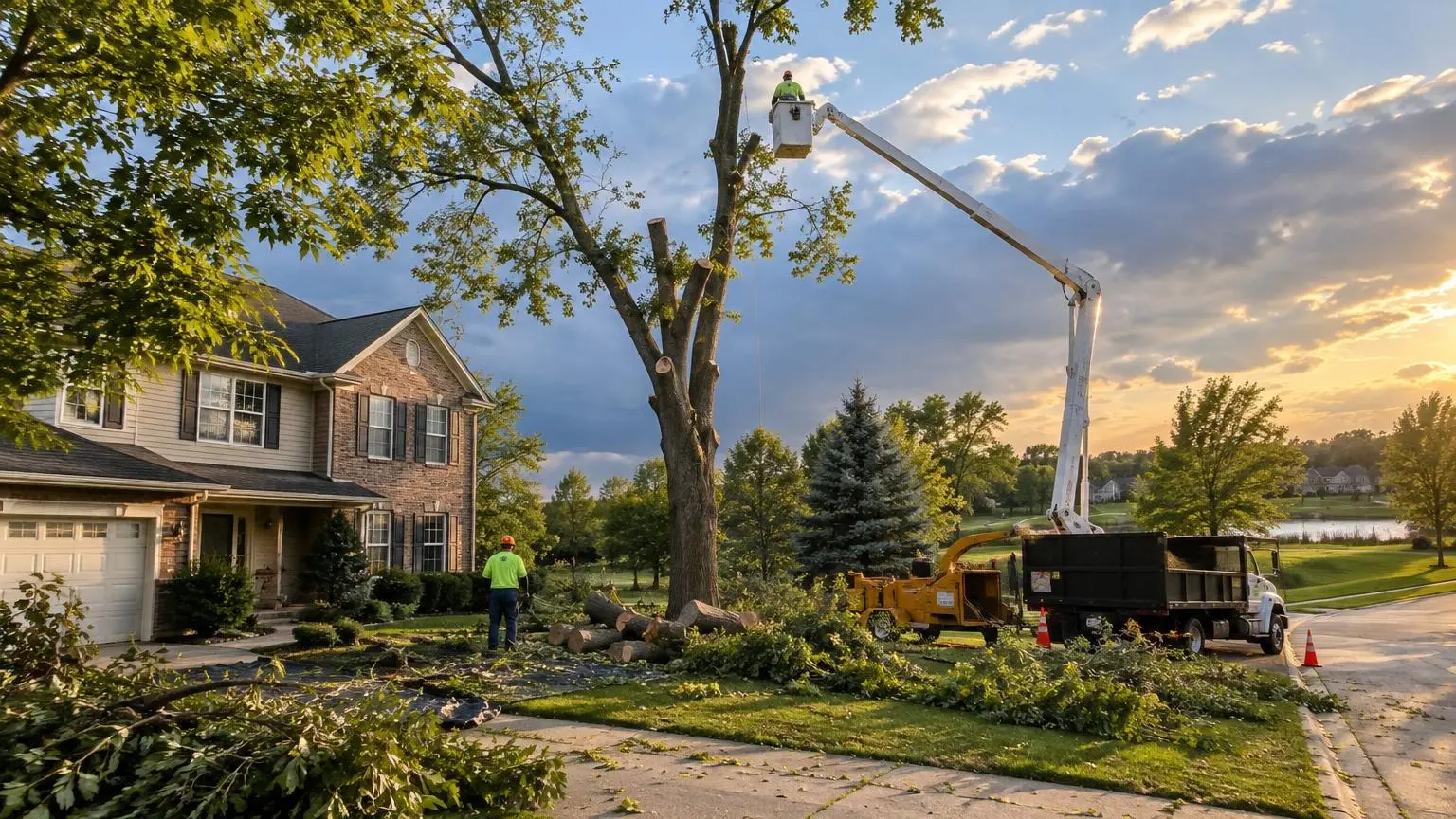
Larger properties at the edge of town give us more room to fell trees, but they also bring long driveways, septic fields and soft ground. We walk the property with you, plan an access route that avoids septic and irrigation, and decide whether a tree can be felled whole or needs to come down in sections.
Firewood and brush
Many Yorkville owners like to keep wood for a fire pit or wood stove. We can cut trunks into rounds and stack them where you want, or chip and haul everything. Brush piles from storm cleanup can be chipped on site. All of this goes on the estimate so the price is clear.
Stumps
Stumps are ground below grade so you can mow, reseed or replant. Utilities are marked through JULIE before we grind, and you can point out private lines like sprinklers and invisible fencing.
Planning a lot before you build
Some Yorkville owners buy a wooded or partly wooded lot and plan to build or add an outbuilding. Deciding early which trees stay and which go gives the builder room and keeps construction from damaging the trees you want to keep. We can walk the lot with you, mark trees for removal and give you an estimate for clearing the footprint and access drive.
Contact
Call (630) 864-5605 or send the form. Tell us roughly where the property is and what the tree is near. Get a free estimate
Yorkville Facts
- County seat on the Fox. Yorkville was settled in 1833, incorporated in 1836 and became the Kendall County seat for good in 1859; the courthouse was completed in 1864.
- Rapid growth, low density. The population grew from 6,189 in 2000 to 21,533 in 2020, about 248%, across roughly 20 square miles, or about 1,077 people per square mile.
- Young households. Census QuickFacts shows a 79.8% owner-occupied rate, 26.8% of residents under 18 and a $335,300 median home value (2020-2024).
- Weather. Yorkville averages about 40 inches of precipitation and 29 inches of snow a year, and spring and summer can bring severe thunderstorms and tornadoes.
Yorkville Questions
Can you take down a dead windbreak row on my property?
Yes. We can remove the dead or failing trees, grind the stumps and leave room for replanting. Each tree in the row is listed so you can decide how much to do.
Do you work outside Yorkville city limits?
Yes, including unincorporated Kendall County near Yorkville, Oswego and Montgomery.
How do you protect a septic field?
We mark it during the estimate and keep heavy equipment off it. If a tree is close to the field, we plan the removal so nothing heavy lands on or crosses it.
Free Estimates in Yorkville, IL
Written estimates across Yorkville and nearby Kendall County.
Tree Removal Near Yorkville
- Tree Removal in Naperville, IL
- Tree Removal in Aurora, IL
- Tree Removal in Wheaton, IL
- Tree Removal in Lisle, IL
- Tree Removal in Downers Grove, IL
- Tree Removal in Warrenville, IL
- Tree Removal in Winfield, IL
- Tree Removal in Glen Ellyn, IL
- Tree Removal in Woodridge, IL
- Tree Removal in Westmont, IL
- Tree Removal in Oswego, IL
- Tree Removal in Montgomery, IL
- Tree Removal in North Aurora, IL
- Tree Removal in Batavia, IL
- Tree Removal in Geneva, IL
- Tree Removal in St. Charles, IL
- Tree Removal in West Chicago, IL
- Tree Removal in Darien, IL
- Tree Removal in Burr Ridge, IL
- Tree Removal in Hinsdale, IL
- Tree Removal in Oak Brook, IL
- Tree Removal in Clarendon Hills, IL
- Tree Removal in Lombard, IL
- Tree Removal in Carol Stream, IL
- Tree Removal in Sugar Grove, IL
- Tree Removal in Willowbrook, IL
- Tree Removal in Elmhurst, IL